 Luca Berton
This Tuesday — March 24, 2026 — I'll be on stage at KubeCon + CloudNativeCon Europe 2026 in Amsterdam, presenting lessons learned from running multi-tenant GPU infrastructure in production. If you're attending, I'd love to meet you.
KubeCon is the world's largest Kubernetes conference: 12,000+ attendees, 300+ sessions, 200+ sponsors, and 100+ countries represented. Being selected to speak means your work was peer-reviewed by the CNCF program committee and deemed valuable to the global cloud-native community. Out of thousands of submissions, only a fraction make the cut.
Here's everything you need to know about my session, what I'll be covering, and how to find me at the conference.
Session Details
- Event: KubeCon + CloudNativeCon Europe 2026
- Title: "Lessons Learned Orchestrating Multi-Tenant GPUs on OpenShift AI with NVIDIA KAI (G/H200)"
- Date: Tuesday, March 24, 2026
- Time: 16:15 – 16:45 CET
- Location: RAI Amsterdam — Hall 8, Room F
- Level: Intermediate
- Track: AI + ML
- Sched: View session on Sched
What I'll Be Covering
GPU compute is the most expensive and contested resource in modern IT. Every organization racing to deploy AI/ML workloads faces the same question: how do you share GPU infrastructure safely, efficiently, and at scale?
This talk is an experience report — not a vendor pitch. Every recommendation comes from something that either worked brilliantly or failed spectacularly in production. Here's what you'll walk away with:
Tenant Isolation Patterns
Namespaces, quotas, and priority classes for safe multi-tenancy on GPU nodes. How to prevent noisy-neighbour problems when multiple teams share the same NVIDIA G/H200 hardware — and how to enforce fair scheduling without manual intervention.
MIG vs. Full-GPU Trade-offs
NVIDIA Multi-Instance GPU (MIG) lets you partition a single GPU into isolated instances. But when should you partition, and when should you dedicate entire GPUs? The answer depends on your workload mix — and getting it wrong wastes expensive hardware or starves critical jobs.
Heterogeneous Node Scheduling
Most real-world GPU clusters aren't homogeneous. You've got different GPU generations, different memory sizes, and different MIG configurations across nodes. I'll show how to use node affinity, taints, tolerations, and scheduling policies to place workloads intelligently across mixed hardware.
Throughput vs. Latency Tuning
Batch training jobs optimize for throughput — maximum GPU utilization over time. Real-time inference optimizes for latency — minimum response time per request. Running both on the same cluster requires different scheduling strategies, and I'll share the patterns we've validated in production.
Driver & Firmware Pitfalls
GPU driver and firmware lifecycle management is one of the least documented and most painful aspects of running GPU infrastructure on Kubernetes. I'll share lessons from the trenches: what breaks during upgrades, how to validate compatibility before rolling out, and how to avoid the "driver mismatch" incidents that can take down your entire GPU pool.
Day-2 Operations
Observability, autoscaling, and chargeback for GPU compute. How to monitor GPU utilization at the MIG instance level, how to implement cost allocation per team, and how to scale expensive GPU nodes responsibly (hint: you don't autoscale GPUs the same way you autoscale CPU).
Practical Manifests & Guardrails
Ready-to-use Kubernetes configurations you can apply on Monday morning. Not slides — actual YAML that works in production.
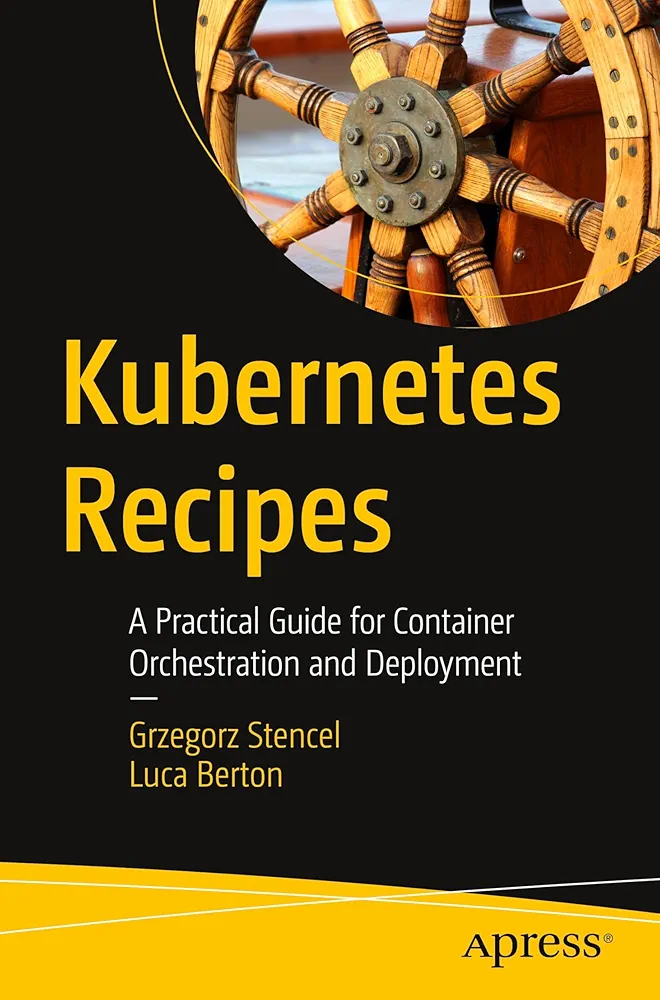
Kubernetes Recipes
A practical guide for container orchestration and deployment by Grzegorz Stencel & Luca Berton (Apress).
Watch on Skillshare →Why This Talk Matters Now
GPU multi-tenancy is largely uncharted territory. Most Kubernetes documentation and tooling assume CPU-based workloads. NVIDIA KAI on Kubernetes is still new. And the combination of OpenShift AI + Traefik + Dell Technologies hardware is a real enterprise stack — not a demo on a single node.
For regulated enterprises — banks, healthcare providers, insurers — this matters even more. GPU chargeback isn't just a cost optimization exercise; it's an audit requirement under frameworks like DORA and NIS2. You need to demonstrate that GPU resources are allocated fairly, monitored continuously, and accounted for accurately.
If you're building AI platforms in a regulated context, this talk gives you the patterns to do it safely, efficiently, and with the evidence trail your auditors expect.
About Me
I'm an AI Infrastructure Advisor helping enterprises translate AI ambition into deployable, governable platforms. My work spans hybrid cloud environments with deep hands-on experience in OpenShift AI, multi-tenant GPU orchestration, and MLOps operating models.
I'm also the author of Kubernetes Recipes (with Grzegorz Stencel) — a practical guide for container orchestration and deployment that covers the Kubernetes patterns underpinning everything I'll discuss in this talk. If you want the foundational knowledge before the session, this is the book to read.
My other publications include Ansible for Kubernetes by Example, Hands-on Ansible Automation, Practical RHEL AI, and five more technical books on infrastructure automation. I'm an instructor on Coursera, Pluralsight, and Udemy, and the creator of the Ansible Pilot project.
Microsoft SQL Server Performance Tuning
Performance tuning essentials for SQL Server. In collaboration with Starweaver.
Start on Coursera →Also Speaking at Red Hat Summit 2026
If you miss me in Amsterdam, catch my lightning talk at Red Hat Summit 2026 in Atlanta on May 12, 2026:
- Title: "GPUs Take Flight: Safety-First Multi-Tenant Platform Engineering with NVIDIA and Red Hat OpenShift AI"
- Format: Lightning Talk (20 min)
- Time: 10:30 AM EDT
- Room: Discovery Theater 1
Same topic, different angle: the Red Hat Summit talk focuses on the platform engineering patterns and safety-first architecture, while the KubeCon talk goes deeper on the NVIDIA KAI orchestration and scheduling specifics.
Let's Connect at KubeCon
I'll be at KubeCon from Monday through Thursday. Whether you want to discuss GPU orchestration, AI platform strategy for your organization, or just swap war stories about Kubernetes in production, I'd love to connect.
Here's how to find me:
- At my session: Hall 8, Room F — Tuesday March 24 at 16:15 CET
- In the hallway track: I'll be around the AI + ML co-located events and the main expo hall
- Book a meeting: Schedule a 15-minute chat before or after the conference
- Connect on LinkedIn: Open Empower on LinkedIn
If you're evaluating multi-tenant GPU infrastructure, building an AI platform for a regulated enterprise, or just getting started with OpenShift AI — bring your questions. The best conversations at KubeCon happen outside the session rooms.
EU AI Act Compliance Checklist
40-point checklist covering risk classification, data governance, transparency, and human oversight. Based on the official regulation.
Get Free Checklist →Resources to Prepare
Want to get the most out of the session? Here's some background reading:
- Kubernetes Recipes — Practical Kubernetes patterns for container orchestration (the foundation for everything in this talk)
- Running AI Agents on Kubernetes — How Kubernetes primitives map to AI workload requirements
- GPU Scheduling for AI/ML Workloads — Deep-dive into Kubernetes GPU scheduling patterns
- Kubernetes Security for Regulated Enterprises — Security patterns relevant to GPU multi-tenancy
See you in Amsterdam! 🇳🇱