 Luca Berton
As enterprises move beyond single AI agents to systems of cooperating agents, orchestration becomes the critical architectural challenge. How do agents communicate? Who decides when agents disagree? How do you maintain governance over a system where multiple autonomous agents interact?
These are the orchestration patterns I've found most effective in enterprise deployments.
Why Multi-Agent Systems
Single agents have limitations that multi-agent architectures address:
- Specialization: Different tasks require different capabilities. A coding agent, a research agent, and a compliance review agent each need different tools and prompts.
- Separation of concerns: Splitting responsibilities across agents improves reliability and auditability
- Parallelism: Multiple agents can work on different aspects of a task simultaneously
- Resilience: If one agent fails, others can continue. The system degrades gracefully.
Orchestration Patterns
Pattern 1: Supervisor Pattern
A supervisor agent coordinates worker agents, delegating tasks and integrating results:
- Architecture: One supervisor agent receives the task, decomposes it into subtasks, delegates to specialized worker agents, and integrates their outputs
- Governance advantage: Single point of control. The supervisor enforces policies, validates outputs, and manages the overall task.
- Best for: Complex tasks with clear decomposition — research reports, compliance reviews, multi-step analyses
- Risk: Supervisor becomes a single point of failure. Supervisor agent's judgment determines overall quality.
Pattern 2: Pipeline Pattern
Agents arranged in a sequence, each processing and enriching the output of the previous:
- Architecture: Task flows through agents sequentially: Research Agent → Analysis Agent → Compliance Review Agent → Report Generation Agent
- Governance advantage: Each stage has clear inputs and outputs. Easy to add validation gates between stages.
- Best for: Structured processes with well-defined stages — document processing, regulatory analysis, content creation workflows
- Risk: Errors propagate through the pipeline. Slow for tasks that could be parallelized.
Pattern 3: Consensus Pattern
Multiple agents independently process the same task, and results are compared or voted on:
- Architecture: Multiple agents (potentially using different models) process the same input. A judge agent or voting mechanism determines the final output.
- Governance advantage: Reduces single-model risk. Disagreement between agents flags uncertainty for human review.
- Best for: High-stakes decisions — risk assessment, medical triage, regulatory classification
- Risk: Higher compute cost. Agents may share the same biases if using similar training data.
Pattern 4: Marketplace Pattern
Agents advertise capabilities and bid on subtasks:
- Architecture: Task decomposed into subtasks published to a marketplace. Agents with relevant capabilities claim tasks. Central coordinator manages task allocation and result integration.
- Governance advantage: Dynamic allocation allows adding new capabilities without redesigning the system.
- Best for: Heterogeneous task environments where required capabilities vary widely between requests
- Risk: Complex coordination. Task allocation fairness and capability matching are challenging.
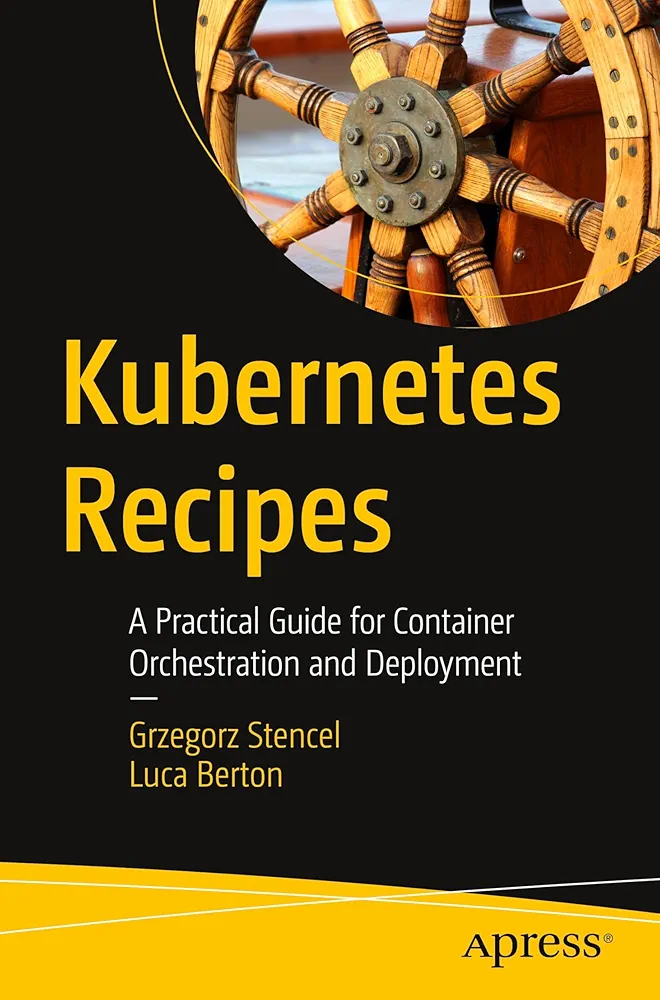
Kubernetes Recipes
A practical guide for container orchestration and deployment by Grzegorz Stencel & Luca Berton (Apress).
Watch on Skillshare →Inter-Agent Communication
Communication Design Decisions
- Structured messages: Define schemas for inter-agent messages. Unstructured natural language between agents leads to interpretation errors.
- Shared context vs. isolated context: Decide what context agents share. Full shared context risks data leakage between agents with different permission levels.
- Synchronous vs. asynchronous: Synchronous for tight coordination, asynchronous for independent parallel work. Match to the task structure.
- Message logging: All inter-agent messages must be logged for audit and debugging. This is non-negotiable in regulated environments.
Governance for Multi-Agent Systems
Agent Identity and Permissions
- Each agent has a unique identity with defined capabilities and permissions
- Least-privilege principle — agents only access tools and data needed for their specific function
- Agent permission changes require governance approval and are audit-logged
System-Level Controls
- Global kill switch: Ability to halt all agents in a system simultaneously
- Resource budgets: System-level limits on total compute, API calls, and cost
- Deadlock detection: Monitor for agents waiting on each other indefinitely
- Output validation: Final system output validated against expected format and content policies before delivery
Federated Learning and Privacy-preserving RAGs
Implement secure AI models using federated learning techniques.
Start on Pluralsight →Enterprise Implementation
Start simple and add complexity as you learn:
- Start with pipeline pattern: Easiest to understand, implement, and govern. Build one successful pipeline before exploring other patterns.
- Add supervisor for complex tasks: When pipeline doesn't fit because tasks need dynamic decomposition.
- Use consensus for high-stakes decisions: Add independent verification for decisions with significant business or regulatory impact.
- Marketplace only at scale: Only when you have many agents with diverse capabilities and highly variable task types.